
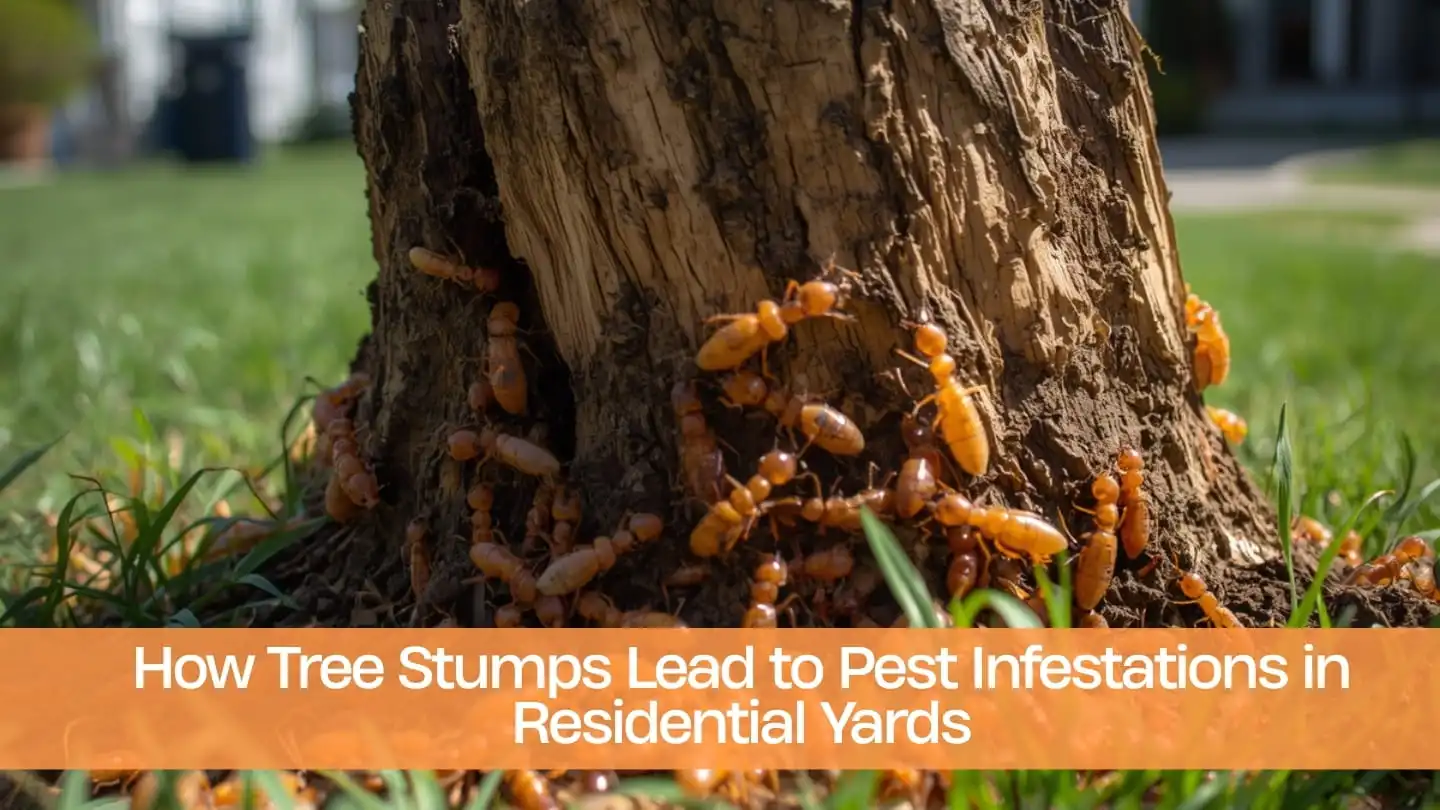
Many homeowners feel the job is completed when a tree is removed. Nonetheless, there may be other problems hidden under the stump. Old tree stumps may be harmless, but they quickly become a breeding ground for pests. These pests are reliant on decaying wood, from termites to ants and even rodents. Untreated, a small stump can cause significant infestations that can contaminate your yard and even your home.
Understanding why tree stumps lead to pests and how to handle them is important to maintaining a healthy, safe, and pest-free outdoor space.
Why Old Tree Stumps Attract Pests
Tree stumps decompose after a tree is removed. This natural process has created a perfect habitat for many types of pests. As the wood softens and absorbs water, insects and small animals can easily move in and make it home.
Termites are among the biggest issues with old stumps. Dead wood is an ideal food source for them. Once termites have established their habitat, they grow quickly. They can gradually spread from the stump to other wooden structures, including fences, decks, and even your house.
Ants are also attracted to tree stumps, particularly carpenter ants. These ants do not eat wood like termites, but tunnel through it to build nests. They can colonize a stump and leave it safe and intact. They may move into other parts of your yard or home as their population grows.
Rats and mice can also shelter themselves in stumps of trees. If the stump breaks down, it makes small openings and tunnels that serve as hiding places. Such insects also look for oases of refuge from predators and weather, and a decaying stump makes a great nest.
Another pest attractor is moisture. Rotating wood retains water and is a damp place that many insects prefer. This combination of food, shelter, and moisture makes tree stumps extremely useful for many pests.
Common Signs of Pest Infestation in Your Yard
A pest problem is not always obvious; however, it’s not always easy to spot a pest problem immediately. But there are some obvious signs that your tree stump is a pest hotspot.
This can be shown by small holes or tunnels in the wood. These can be made by termites or by ants. You may also notice sawdust strewn over the stump that carpenter ants often leave behind in their excavations.
Another sign is increased insect activity in the area. If you see ants running around the stump or a flurry of winged insects roaming about in the vicinity, it is possible that it is a growing infestation. Termites, for instance, produce winged swarmers when creating new colonies.
Unusual sounds can also be a clue. Even in still conditions, there may be a slight rustling or clicking sound from inside the stump. This indicates that insects are active in the wood.
Some rodents have small burrow openings atop a stump, droppings, or chewed material along the trail. It may also be possible to see tracks or paths that lead to and from the stump.
If you see any of these signs, then you should act soon. When the problem is left unresolved, pests can spread further and cause more damage over time.
How Stump Grinding Helps Prevent Pest Problems
Undoubtedly, one of the best ways to deal with pest infestations is by removing the source. This is where stump grinding comes in. The stump grinding process uses special equipment to whittle down the stump into small wood chips and then remove it from your yard.
By removing the stump, you also have eliminated the food source and shelter on which pests depend. This considerably reduces the likelihood of termites, ants, and rodents settling in your yard. It also stops existing pests from migrating to other areas.
Stump grinding is faster and more efficient than allowing a stump to decay naturally. Natural decomposition is likely to last several years, and pests will have plenty of time to invade. This risk is eliminated almost immediately by grinding the stump.
Another benefit of stump grinding is that it improves the look of the yard. A stump that is left is an eyesore and a waste of space. Once the lawn is cleared, you can plant flowers, shrubs, or landscape for other outdoor activities.
When you are looking for stump grinding near me, you need to hire a professional with the right tools and experience. The stump is then trimmed down to the ground level, so that no debris remains for pests to consume.
For residents in certain areas, quality stump removal services can be very beneficial. Local pest control professionals know of common regional pest issues and are able to successfully address your concerns.
Experts may also check the surrounding area for signs of existing infestations, as well as grinding. This will prevent pest problems from becoming more serious.
Information about termites and their effects on homes can be found here, in this reliable source provided by the Environmental Protection Agency, https://www.epa.gov/safepestcontrol/termites-how-identify-and-control-them.
Conclusion
Tree stumps may seem like a small part of the tree removal process, but if not properly addressed, they can become a serious pest problem. They are particularly attractive to termites, ants, and rodents because they contain decayed wood, moisture, and shelter. These insects are also likely to quickly spread out of the stump and devastate your home over time.
Knowing the signs of infestation early can help you act soon enough to prevent further infestation. The trickiest solution is to remove the stump altogether. Stump grinding eliminates conditions in which pests can survive, making your yard safer and cleaner.
If you have an old stump or want to prevent future problems, you might want to contact a stump removal professional. Do not wait for pests to invade your home; take action today. Call Stump Busters to save your lawn from pests and achieve a pest-free yard.
FAQ
Why do termites like tree stumps?
Tree stumps are particularly attractive to termites because they live on decaying wood, which provides both food and shelter.
Can a tree stump cause pests to enter my home?
Yes, termites and ants can spread from a stump to a nearby structure, including your own home.
How long does it take for a stump to attract pests?
It can occur within months, when the wood starts to decay and retains moisture.
Is stump grinding better than leaving the stump to rot?
Yes, stump grinding eliminates the pest attraction and prevents infestations.
How do I find reliable stump removal services?
Online searches on keywords such as stump grinding near me, stump removal in Albany NY will show you what is needed.