

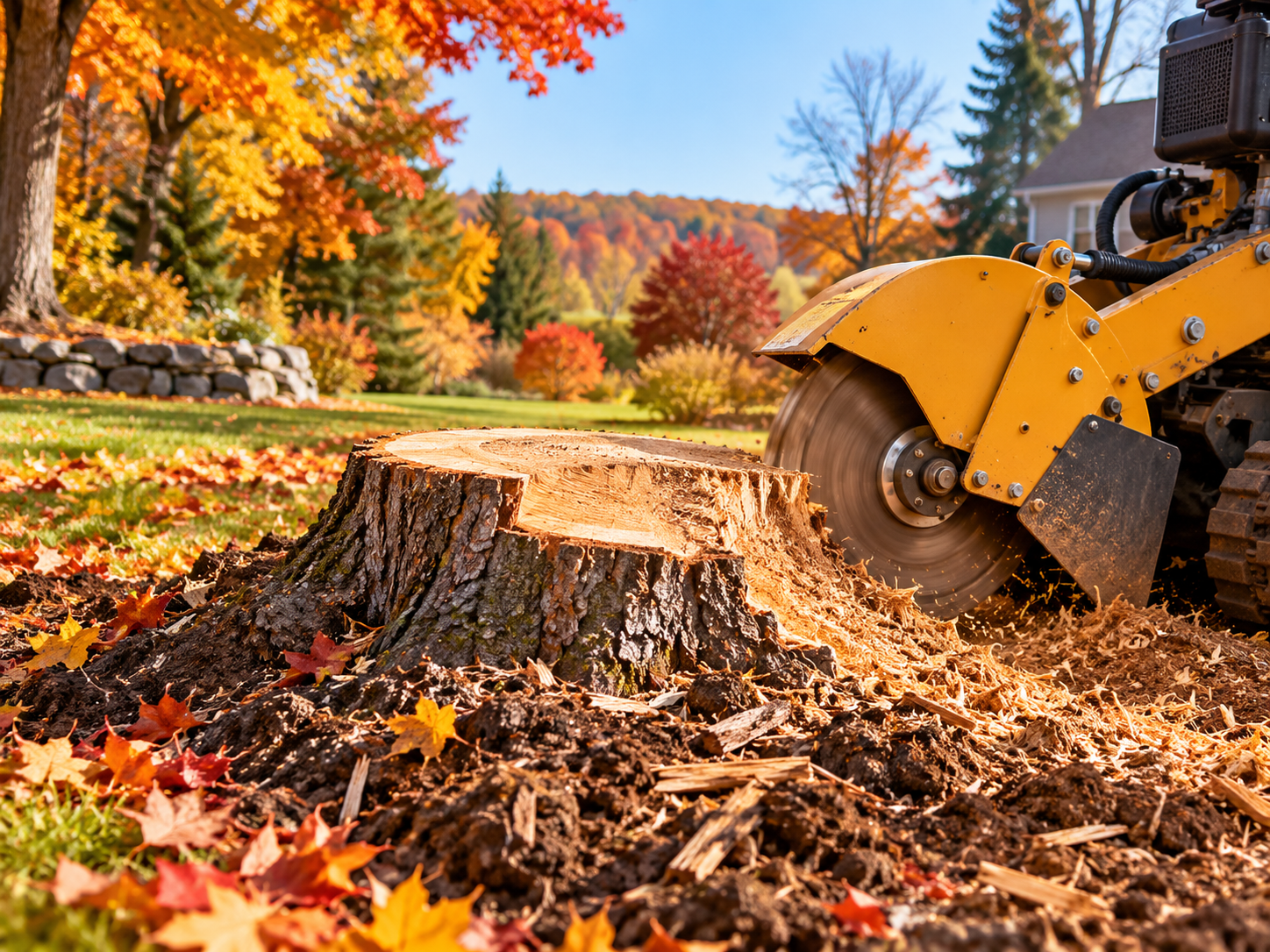
- Fall is the best time of year to grind a stump in the Capital Region — the ground is still workable, the yard is winding down for the season, and you head into spring with a clean, usable space.
- Stumps left over winter invite pests, fungi, root sprouts and hidden trip hazards under the snow — problems that only get more expensive by March.
- Frozen ground can slow grinding and stress equipment, which is exactly why the fall window — before the first hard freeze sets into local soil — matters.
- Stump Busters grinds stumps 4–6 inches below grade, recycles the wood chips, and leaves your yard clean — across West Charlton, Ballston Spa, Burnt Hills and the surrounding towns.
Ready now? Request a free fall stump grinding quote before the ground freezes.
If you live anywhere around West Charlton, you already know how fast our seasons turn. One week you are mowing in a t-shirt, and the next there is frost on the windshield and the Sacandaga wind has a bite to it. For homeowners with an old stump sitting in the yard, that quick turn matters more than most people realize. The few weeks of fall — roughly from mid-October into November — are the single best window of the year to deal with a stump, and once the ground locks up for winter, your options get narrower and your yard gets messier.
We have been grinding stumps across the Capital Region for over 15 years, and if there is one piece of advice we give neighbors every autumn, it is this: don’t let that stump ride out another winter. In this guide we will walk through why fall stump grinding makes so much sense here in West Charlton and Ballston Spa, what actually happens to a stump you leave through the cold months, how frozen ground affects the work, and what the process looks like when you bring in a crew that knows local soil. No pressure, no jargon — just the straight story from people who do this for a living.
Why Fall Is the Sweet Spot for Stump Grinding in the Capital Region
Timing is everything with yard work, and stumps are no exception. There are a handful of reasons fall lines up so well for grinding here in the West Charlton and greater Saratoga County area — and most of them come down to the weather and the way our soil behaves.
The ground is still soft enough to work
A stump grinder does its best work when the soil around the root collar is loose and diggable. In early-to-mid fall, our ground is still holding the warmth of summer — moist, pliable, and easy for the cutting wheel to chew through along with the surface roots. Once a hard freeze sets in and frost drives down into the soil, everything tightens up like concrete. Grinding is still possible, but it is slower and harder on equipment, which we will get into below.
Your yard is winding down anyway
By October, the lawn has stopped its heavy growth, the flower beds are fading, and the garden is mostly put to bed. That makes fall the lowest-impact time to run a grinder across your property. There is far less for the machine to disturb, and any minor surface scuffing has all winter to settle before you reseed in spring. Grind in July and you are babying new turf around a fresh scar; grind in October and nature does the healing for you.
You walk into spring ready to plant
This is the big one. Homeowners who grind in the fall get to skip the spring rush entirely. When April arrives and you finally want to lay sod, build a patio, extend a garden bed, or just enjoy an open lawn, the stump is already gone and the ground has settled. No waiting on a booked-out crew in peak season, no muddy spring mess. A fall grind is really an investment in next year’s yard — which is why our professional stump grinding service sees its steadiest demand in the weeks right before the freeze.
What Happens to a Stump You Leave Through a Capital Region Winter
A stump is not a neutral piece of scenery. Left in the ground, it is a slowly decaying chunk of organic matter, and over a long Upstate New York winter it quietly causes a surprising number of headaches. Here is what we commonly find when we come out to grind a stump that has sat for a season or two:
- Pest hotels. Decaying stumps are prime real estate for carpenter ants, termites, beetles and other wood-boring insects. A stump near your foundation is essentially a welcome mat, and those colonies don’t stay in the stump — they spread toward the house.
- Fungus and mushrooms. Damp, rotting wood sprouts fungi, and some of those can travel to healthy nearby trees and shrubs. It is also just unsightly — nobody wants a ring of toadstools in the lawn.
- Stubborn regrowth. Plenty of species send up suckers and new shoots from a cut stump, especially maples, poplars and locust. Ignore it and you can end up fighting a thicket of saplings where one tree used to be.
- Hidden trip hazards under snow. Once the snow covers your yard, that stump disappears from view — but it is still there to catch a snowblower, a plow blade, an ankle, or a sled. Buried hazards cause real damage and real injuries every winter around here.
- Drainage and settling issues. As roots rot, they leave voids underground that can hold water and cause low, soggy spots in the lawn come the spring thaw.
None of these get better with time. Every one of them is cheaper and easier to prevent with a fall grind than to deal with after the stump has spent another winter breaking down in your yard.
Does Frozen Ground Affect Stump Grinding?
Yes — and this is the question we hear most once the cold weather talk starts. The honest answer: frozen ground makes stump grinding harder, but not impossible. When frost drives down into the soil, the earth around the stump and its surface roots turns rigid. The grinder’s cutting wheel has to work through frozen dirt and grit along with the wood, which slows the job, dulls teeth faster, and puts extra strain on the machine.
In our climate, the top layer of soil typically starts to freeze once we get a stretch of nights in the 20s, and the frost line can push well down into the ground by deep winter. The wood of the stump itself doesn’t freeze solid the way the soil does, so the stump can still be ground — it is the frozen earth packed around the base and roots that creates the resistance.
This is exactly why we point homeowners toward the fall window. Grinding before that first hard freeze means the crew works faster, the finish is cleaner, and you are not paying for the extra time frozen ground demands. If you have already missed the window, don’t worry — we grind year-round across the Capital Region, including through winter. We simply plan for it, and in some cases a full stump removal is the smarter route for a frozen, heavily rooted stump. The key takeaway is that sooner is easier, and fall is easiest of all.
So, What Really Is the Best Time of Year to Grind a Stump?
If you want the one-line answer: the best time to grind a stump is the fall, and the second-best time is right now. A stump only gets more entrenched, more decayed, and more of a nuisance the longer it sits, so the ideal day to grind is always as early as you can manage.
That said, here is how the seasons actually stack up in our area:
- Fall (ideal): Workable soil, dormant yard, spring-ready result, and typically better crew availability than the summer rush.
- Late winter / early spring (good): Once the frost starts leaving the ground, grinding gets easy again — a solid choice if you are planning spring landscaping.
- Summer (fine, but busy): Perfectly doable, though peak demand means tighter scheduling and you are working around an active lawn.
- Deep winter (possible): Frozen ground slows things down, but a hazardous or in-the-way stump should not wait for spring on principle.
For most West Charlton and Ballston Spa homeowners staring at a stump right now, in October, the math is simple: grind it before the freeze and start next year with a clean slate.
Quick Questions Homeowners Ask Us Every Fall
How long does it take to grind one stump?
What happens to all the wood chips and grindings?
Will grinding damage the rest of my lawn?
The fall window closes fast once those cold nights arrive. If there is a stump in your yard, now is the time to handle it — not after it has spent the winter under the snow. Get on the schedule before the ground locks up.
Get a Free QuoteHow We Approach Fall Stump Grinding at Stump Busters
Not all stump grinding is the same, and 15-plus years of doing this across the Capital Region has taught us where the details matter. When you bring in Stump Busters for a fall grind, here is how a typical job runs:
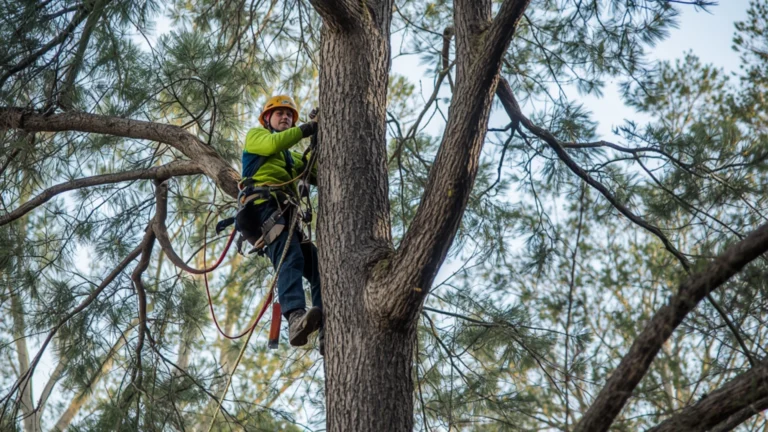
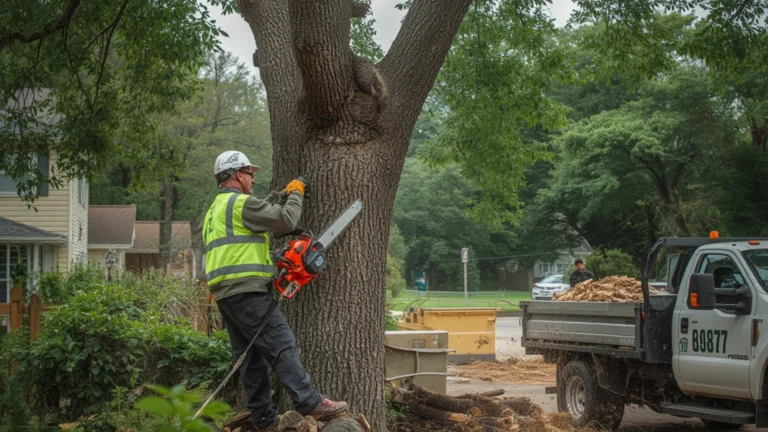
- We assess the site first. Before a machine touches anything, we look at the stump’s size, species, root spread, and what is around it — fences, irrigation lines, septic, utilities, garden beds. Our ISA-certified arborists know what is going on below the surface, not just above it.
- We grind below grade. We don’t just shave the top off. We take the stump down 4–6 inches below ground level — deeper if you plan to plant or build there — so you are left with a surface you can actually use, not a shaved-off nub that sprouts again in spring.
- We manage the roots. Surface roots that radiate out from the stump get ground down too, which is what stops the regrowth and gives you a genuinely clean result.
- We clean up and recycle. The chips and grindings get cleared, and we leave your yard tidy. The material is recycled rather than dumped — part of the sustainable, low-waste way we like to work.
Everything we do is backed by being fully licensed, insured and bonded, with honest, written estimates and no surprise fees — we walk the property, explain what needs doing, and the quote is the quote. That combination of local experience, arborist-level knowledge, and straightforward pricing is why so much of our work comes from neighbors who were referred by other neighbors. If you want the deeper detail on equipment and what is included, our stump grinding service page lays it all out.
Serving West Charlton, Ballston Spa, Burnt Hills & the Towns Around Us
We are based right here in West Charlton, NY, which means we are not a crew driving in from two counties over who doesn’t know the lay of the land. We know how the sandy, well-drained soils out toward Galway differ from the heavier ground closer to the Mohawk, and we know how early the cold tends to settle in across the ridges and open farmland around Charlton Road and Sacandaga Road. That local knowledge shapes how we schedule and approach fall work.
Homeowners across the greater Capital Region rely on us for fall stump grinding, including:
- West Charlton, Galway, and Burnt Hills
- Ballston Spa, Ballston Lake, and Clifton Park
- Saratoga Springs, Scotia, Glenville, and Rotterdam
- Schenectady, Amsterdam, and the surrounding towns
If you are not sure whether your address falls in our service area, just ask — we are almost always happy to help a neighbor, and we cover a wide stretch of the region daily.
Grinding or Removal — Which Do You Actually Need This Fall?
People use “stump grinding” and “stump removal” interchangeably, but they are different jobs. Grinding chews the stump down below the surface and leaves the root system to decay naturally in place — it is faster, less disruptive, and ideal when you simply want the stump gone from view and out of the way. Removal pulls the entire stump and its major roots out of the ground, which leaves a larger hole to backfill but makes sense when you are excavating, building a foundation, or need the roots fully gone.
For the vast majority of fall yard jobs — reclaiming lawn space, clearing a hazard, prepping for spring planting — grinding is the right call. But if you think you might need the roots fully out, our team can talk you through stump removal options and help you pick the approach that actually fits your project and your budget. There is no one-size-fits-all answer, and we would rather get you the right service than the bigger invoice.
The ground won’t stay soft much longer. Handle that stump now, in the fall window, and you’ll thank yourself in April when the lawn greens up clean and open. One stump or a whole backyard — Stump Busters is ready to help.
Book Your Fall GrindFrequently Asked Questions
Is it cheaper to grind a stump in the fall?
Can you grind a stump when there is snow on the ground?
How deep do you grind the stump?
Will the stump grow back after grinding?
Do I need to do anything to prepare for the crew?
What areas do you serve besides West Charlton?
Helpful Resources
For homeowners who want to dig deeper into tree and stump care, these independent, authoritative resources are worth a look:
- Trees Are Good (International Society of Arboriculture) — consumer tree-care guidance from the body that certifies arborists.
- Arbor Day Foundation — practical information on tree health, removal, and replanting.
- New York State DEC – Trees & Forests — state guidance relevant to trees and land in New York.
Disclaimer: This article is provided for general informational purposes only and reflects the experience of Stump Busters in the Capital Region of New York. It is not a substitute for a professional on-site assessment. Tree and stump conditions vary by property; timelines, costs, and recommendations depend on an individual evaluation. Always consult a qualified, certified arborist before making decisions about trees or stumps on your property.


Leave a Reply